
A Quiet Corner with a Larger Story
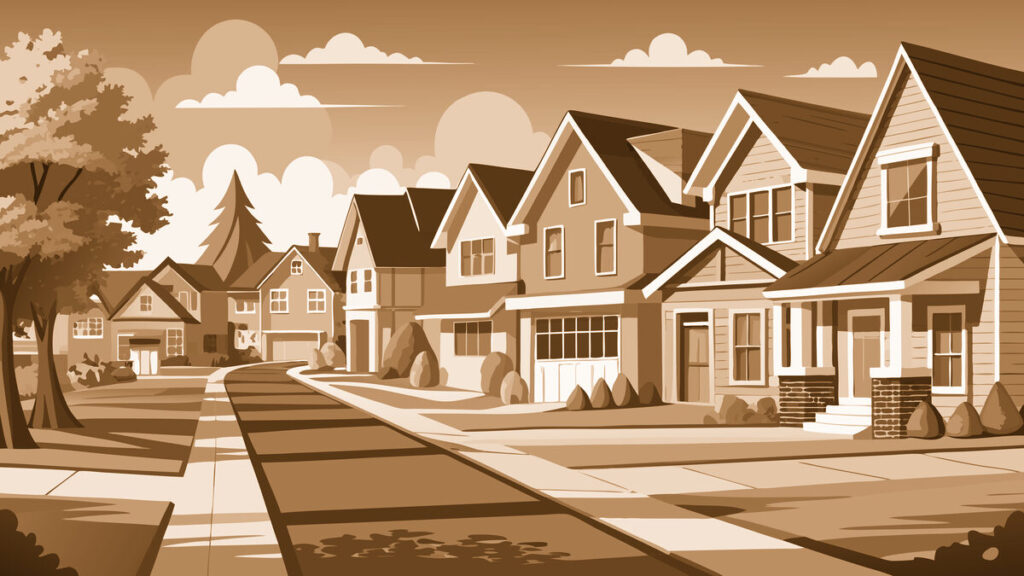
Spend a little time in Sunrise Ridge and it is easy to understand its appeal. The neighborhood has the comfortable feel of an established Arvada community: tree-lined residential streets, well-kept ranch-style homes, sidewalks busy with walkers, and open spaces that invite neighbors to linger. Yet Sunrise Ridge is also a relatively modern neighborhood, shaped by the westward growth that transformed Arvada during the late twentieth and early twenty-first centuries.
Generally located between West 60th Avenue and West 64th Avenue, with Easley Road to the west and Quaker Street to the east, Sunrise Ridge sits in west-central Arvada. Its location places residents close to Ralston Creek, Long Lake Regional Park, the Ralston Creek trail system, and the broad network of parks that make this part of Jefferson County so appealing.
The neighborhood’s history is not centered on one famous mansion or preserved commercial block. Instead, its heritage is found in the transition from agricultural land to a carefully planned residential community—and in the way older Arvada traditions continue to shape everyday life.
Before Sunrise Ridge: Arvada’s Agricultural Beginnings
Long before Sunrise Ridge was built, the surrounding area belonged to the larger agricultural landscape of the Ralston and Clear Creek valleys. Arvada’s earliest modern history reaches back to June 22, 1850, when Lewis Ralston discovered gold in a stream that later carried his name. Although the gold discovery did not produce a lasting mining town, it helped bring settlers into the region.
By the 1860s, many people who had come west seeking gold had turned instead to farming. The valley’s fertile soil and access to water supported wheat, corn, oats, fruit, vegetables, and especially celery. Arvada eventually became known as the “celery capital of the world,” a reminder that the city’s roots are agricultural as much as suburban.
In 1863, Benjamin Franklin Wadsworth acquired land in the area and began planning a town. His wife, Mary Ann, is credited with naming Arvada after her brother-in-law, Hiram Arvada Haskins. The town was formally announced in 1870, and the railroad soon helped connect the growing community with Denver and other Front Range settlements.
That history still matters in Sunrise Ridge. The neighborhood may be filled with homes rather than fields, but its open drainage corridors, creekside paths, and spacious parks echo the landscape that first attracted settlers.
How Sunrise Ridge Got Its Name
The name *Sunrise Ridge* appears to be a modern development name rather than a historic farm or early settlement name. Available city and parks records identify Sunrise Ridge as a planned residential development that contributed land for both housing and public recreation.
The name itself is fitting. “Ridge” reflects the neighborhood’s gently elevated setting and its relationship to the rolling terrain west of central Arvada. “Sunrise” evokes the open eastern views and the bright, expansive character of the area. While no single founding document appears to record a formal naming ceremony, the name likely reflects the developer’s effort to present the community as a pleasant, open residential setting with a strong connection to Colorado’s light and landscape.
That kind of naming was common during Arvada’s suburban expansion. New communities often received names suggesting natural beauty, optimism, or a connection to the foothills. Sunrise Ridge fits comfortably within that tradition while becoming a recognizable place in its own right.
The Neighborhood Takes Shape
Sunrise Ridge developed during a period when Arvada was expanding westward from its historic core. After World War II, new roads, schools, utilities, and housing subdivisions began transforming former agricultural and semi-rural land across the city. Families seeking more space and a quieter setting found Arvada attractive, especially as Denver’s metropolitan area grew.
The homes in Sunrise Ridge reflect this suburban era. Many are medium-sized ranch-style houses and bungalows, designed for practical family living. Their one-story layouts, attached garages, modest front yards, and backyard gathering spaces reflect the preferences of late twentieth-century homebuyers.
Unlike Arvada’s older neighborhoods near Olde Town, Sunrise Ridge was not built around a traditional commercial main street. It was designed primarily as a residential community, with local streets feeding into larger routes such as West 64th Avenue. Over time, landscaping matured, sidewalks became established walking routes, and the neighborhood developed the settled appearance residents recognize today.
One of the most important milestones came with the creation of Sunrise Ridge Park. The park was dedicated to the city through a combination of approximately eight acres provided by the housing development and nearly six acres associated with a former elementary school site later declared surplus by R-1 Schools. Landscape, irrigation, and trail improvements were completed in phases during the early 2000s, including major work in 2004 and 2006.
Sunrise Ridge Park and Everyday Heritage
At 17102 West 61st Drive, Sunrise Ridge Park is the neighborhood’s most visible landmark. It is more than a playground or patch of green; it represents the community’s transition from private development to shared civic space.
Today, the park includes:
- Multipurpose grass fields
- A playground
- A walking path
- A reservable pavilion
- Picnic tables and charcoal grills
- A half-court basketball area
- A bocce ball court
That bocce court is a particularly nice example of how newer amenities can become part of a neighborhood’s identity. The park serves children, athletes, dog walkers, picnic groups, and residents simply looking for a pleasant place to sit outdoors.
The park also helps connect Sunrise Ridge to Arvada’s broader system of trails and open spaces. Ralston Creek winds through portions of the surrounding area, and nearby paths provide informal links between homes, parks, and regional recreation areas. Long Lake Regional Park, just west of the neighborhood, expands those opportunities with water, open land, wildlife habitat, and room for longer walks.
How Sunrise Ridge Has Evolved
Over the decades, Sunrise Ridge has changed in familiar ways. Young families who moved into new homes eventually became longtime residents. Children who once played in unfinished yards grew up, while later generations arrived to use the same streets and park spaces. Trees matured, gardens filled in, and houses received additions, renovations, and updated landscaping.
The neighborhood also became more connected to the rest of Arvada. Improvements to trails and parks gave residents better access to outdoor recreation, while nearby schools, shopping areas, and major roads made daily life more convenient. Yet Sunrise Ridge has largely retained its residential character.
Its evolution is visible in small details: a newer fence beside an original ranch house, a well-used sidewalk leading toward the park, or neighbors meeting under the pavilion for a birthday party. These ordinary scenes are part of the neighborhood’s heritage too.
A Living Piece of Arvada
Sunrise Ridge may not be one of Arvada’s officially designated historic districts, but history is not limited to buildings from the nineteenth or early twentieth centuries. The neighborhood tells a later chapter of the city’s story—the chapter in which farmland became family housing, planned development made room for public parks, and a growing suburb worked to preserve a sense of community.
What makes Sunrise Ridge special is that it combines modern suburban planning with older Arvada values: access to open land, appreciation for the outdoors, and a neighborly pace of life. From the paths near Ralston Creek to the lawns of Sunrise Ridge Park, the neighborhood remains connected to the landscape that shaped Arvada from the beginning.
For longtime residents, that continuity is easy to feel. Sunrise Ridge is a place built in a newer era, but it carries forward the same qualities that have always made Arvada home: room to breathe, room to gather, and a strong connection to the land.